
This post may contain affiliate links. See my disclosure policy.
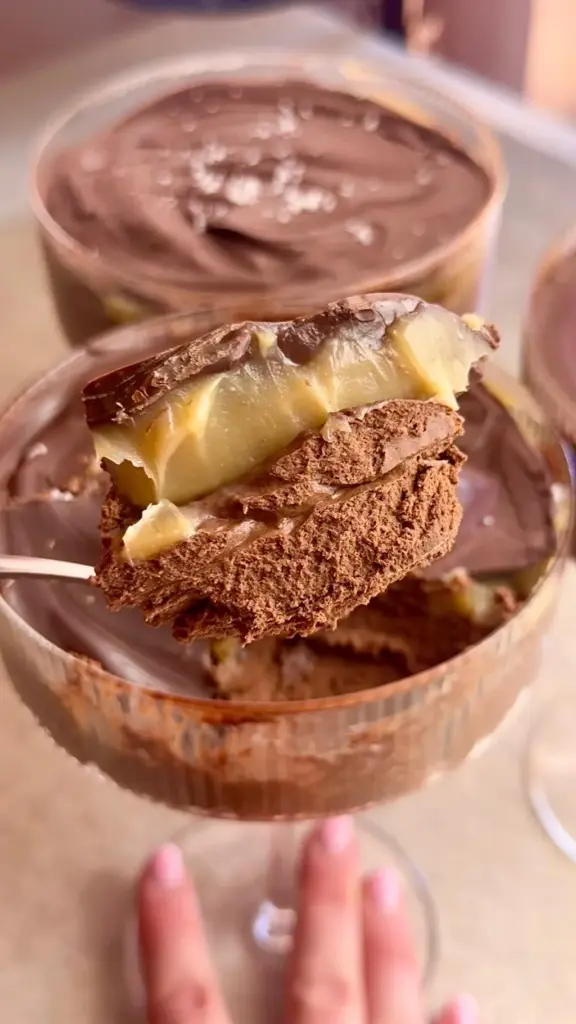
This dark chocolate mousse comes in three layers: a silky, airy mousse, a thin pour of honey salted caramel and a crisp shell of tempered chocolate on top. Your spoon cracks through the chocolate, drags through the caramel and sinks into the mousse, all in one go.
It looks like something you’d order at a restaurant, but it’s one of the most relaxed desserts to serve at home. The mousse and caramel are made ahead, the shell goes on once the caramel has set, and the fridge does the rest. By the time your guests arrive, pudding is already done.
Rich, a little salty, a little floral from the honey, and very hard to stop eating.
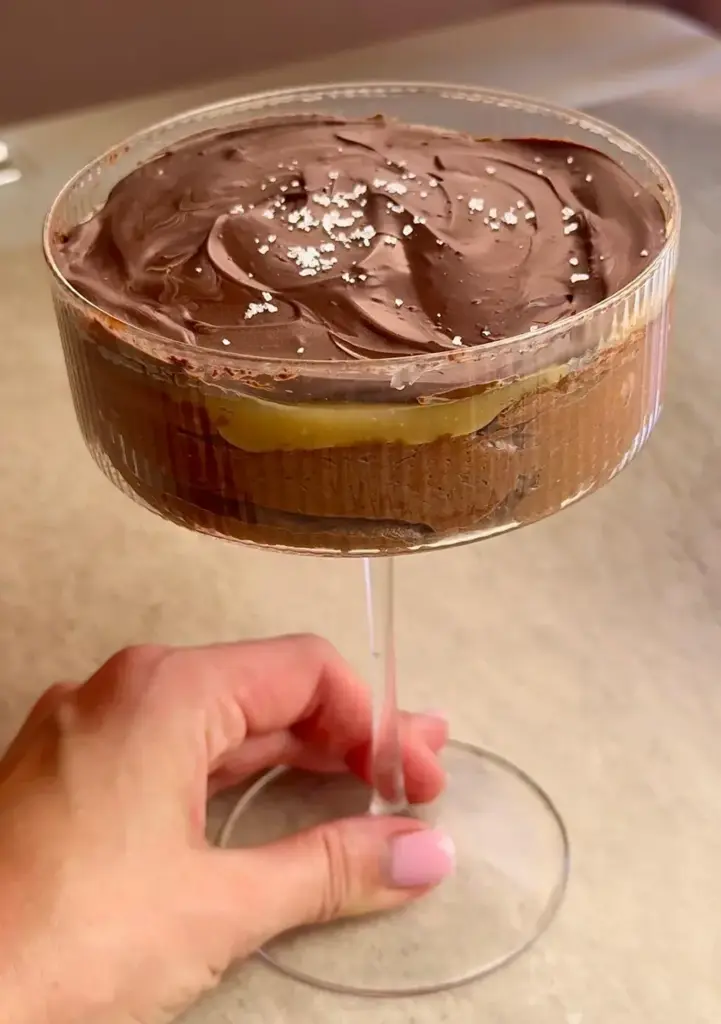
What makes this dark chocolate mousse special?
A light, stable mousse
Classic chocolate mousse is often made with raw eggs. In this version, both the yolks and the whites are gently heated over a bain-marie. The yolks are whisked with some of the cream until they reach 71°C, then whisked into the melted chocolate for a smooth, rich base.
The whites are whisked with the sugar to 71°C, then whipped into a glossy meringue. Warming the whites dissolves the sugar completely, which gives you a stable meringue that holds its air while you fold. Softly whipped cream adds richness, and the meringue keeps everything light.
Heating the eggs this way doesn’t guarantee pasteurisation, so if you’re serving anyone at higher risk, use pasteurised eggs. There’s more on this in the recipe notes and FAQs below.
The honey salted caramel
The caramel starts with sugar and a splash of water, cooked without stirring until it turns a deep amber. Honey, salted butter, warm cream and flaky sea salt go in at the end.
Don’t pull it off the heat too early. Pale caramel tastes mostly of sugar, while a deep amber caramel has a slightly bitter, toasty edge that stands up to dark chocolate. The honey adds a gentle floral note and the salt keeps all that sweetness in check.
The chocolate shell
The finishing layer is a thin sheet of tempered dark chocolate. Tempering gives the chocolate its glossy finish and clean snap, so it breaks into shards when you tap it with a spoon.
The recipe uses the seeding method: melt most of the chocolate, stir in the rest to bring the temperature down, then gently rewarm it to working temperature. All you need is a thermometer and a bit of patience.
Tips for the best chocolate mousse
Use a thermometer. Both egg mixtures need to reach 71°C, and tempering depends on three specific temperatures. A digital probe thermometer takes the guesswork out of all of it.
Cool the chocolate base, but not too much. If it’s still hot when the cream goes in, the cream melts and the mousse turns dense. If it’s gone cold, the chocolate can set into little flecks. Aim for barely warm.
Whip the cream to soft peaks. Soft peaks fold in easily and keep the mousse silky. Stiffly whipped cream is harder to fold and can make the texture grainy.
Fold gently, in two additions. Use a large spatula, cut down through the middle of the bowl and sweep up the side. Stop as soon as you can’t see streaks of cream or meringue.
Give the caramel room to bubble. Use a deep, heavy-based saucepan. It foams up hard when the butter and cream go in, and warming the cream first helps it stay smooth.
Let the caramel set completely before adding the shell. Warm caramel will melt the chocolate and you’ll lose that snap.
Keep the shell thin. A thin layer cracks cleanly under a spoon. A thick one turns into a chisel job.
Ingredients and substitutions
Dark chocolate: Anything between 50 and 70% cocoa works. Closer to 70% gives you a deeper, less sweet mousse. Use a chocolate you’d happily eat on its own, because it’s the main flavour here.
Double cream: Gives the richest result. Fresh whipping cream works too, with a slightly softer set.
Instant espresso powder: Deepens the chocolate flavour. At half a teaspoon you won’t taste coffee, but you can leave it out.
Honey: A mild honey keeps the caramel balanced. A stronger honey, like fynbos, will come through more.
Salted butter: If you only have unsalted, use it and add an extra pinch of flaky salt to the caramel.
How to serve dark chocolate mousse
Serve it straight from the fridge in the glasses you set it in. It’s rich, so small glasses are plenty. A few extra flakes of sea salt on the shell look lovely, and a spoon of lightly whipped cream on the side never hurts.
Clear glasses or jars show off the layers, which is half the fun.
Making it ahead and storing
This dessert is made for planning ahead. Make the mousse and caramel the day before, then add the chocolate shell on the day once the caramel has fully set. Keep the finished desserts covered in the fridge and eat them within 2 days.
Skip the freezer. As it thaws, condensation forms on the chocolate shell, dulls the finish and softens the snap.
Crack, ooze, melt
Everything in this dessert comes from ingredients you probably already have: chocolate, cream, eggs, sugar, butter and a little honey. The technique does the heavy lifting. Watch your temperatures, fold gently and give it time in the fridge.
If you make it, tag me @blissfulbites_za on Instagram. I want to see that first crack.

Dark Chocolate Mousse with Honey Salted Caramel
Ingredients
For the chocolate mousse
- 242 g dark chocolate 50 to 70% cocoa, finely chopped
- 500 ml double cream divided
- 52 g caster sugar
- 2 eggs separated
- 1 tsp vanilla extract
- ½ tsp instant espresso powder
- 1 pinch salt
For the honey salted caramel
- 125 g caster sugar
- 2 tbsp water
- 2 tsp honey
- 50 g salted butter cubed
- 100 ml double cream warmed
- ½ tsp flaky sea salt
For the chocolate shell
- 125 g dark chocolate 50 to 70% cocoa, finely chopped
Instructions
Make the chocolate mousse
- Melt the dark chocolate gently over a bain-marie or in short bursts in the microwave. Set aside.
- Place the egg yolks and 100 ml of the double cream in a heatproof bowl over a saucepan of gently simmering water. Whisk continuously until the mixture reaches 71°C.
- Gradually whisk the warm egg yolk mixture into the melted chocolate until smooth. Stir in the vanilla extract, espresso powder and a pinch of salt. Allow the mixture to cool until barely warm.
- Place the egg whites and caster sugar in a clean heatproof bowl over a bain-marie. Whisk continuously until the mixture reaches 71°C and the sugar has dissolved.
- Remove from the heat and whisk to glossy peaks, allowing the meringue to cool as you whip.
- In a separate clean bowl, whip the remaining 400 ml double cream to soft peaks.
- Gently fold the whipped cream into the chocolate mixture in two additions.
- Fold in the whipped egg whites in two additions, taking care not to knock out too much air.
- Divide the mousse between six serving glasses or bowls. Refrigerate for at least 3 hours, or until set.
Make the honey salted caramel
- Add the caster sugar and water to a heavy-based saucepan. Gently swirl to moisten the sugar evenly.
- Heat over medium heat without stirring. If sugar crystals form on the sides of the pan, carefully brush them down with a wet pastry brush.
- Once the syrup begins to colour, gently swirl the pan as needed. Continue cooking until the caramel reaches a deep amber colour.
- Remove the pan from the heat and carefully stir in the honey, followed by the cubed butter. The mixture will bubble vigorously.
- Gradually pour in the warm cream, stirring carefully until smooth.
- Stir in the flaky sea salt.
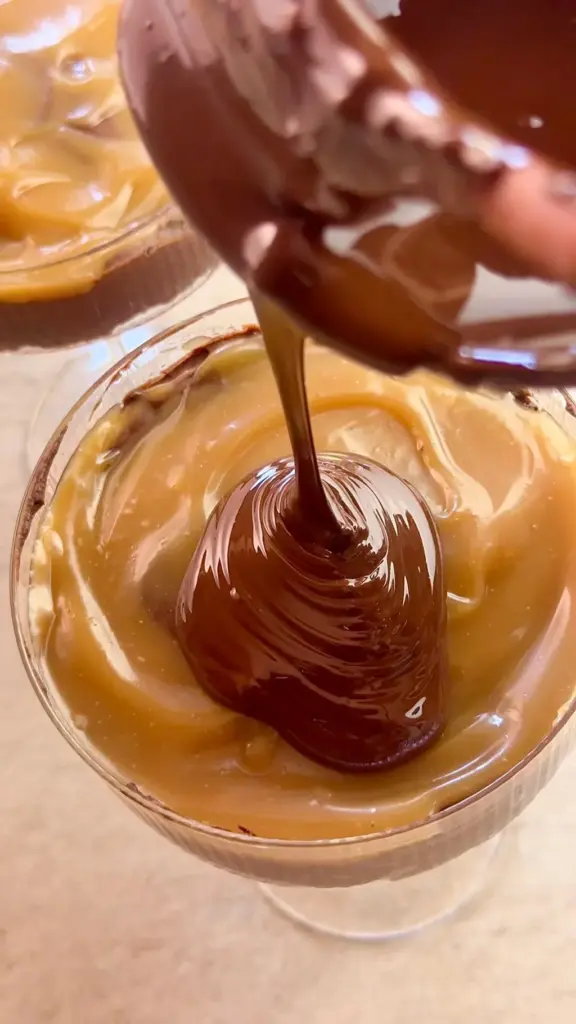
- Allow the caramel to cool until thickened but still pourable. Spoon a thin layer over each chilled mousse and refrigerate until the caramel has cooled and set.
Make the chocolate shell
- Ensure the caramel layer is completely cool and set before adding the chocolate.
- Melt two-thirds of the finely chopped dark chocolate gently, heating it to approximately 45 to 50°C.
- Remove from the heat and add the remaining chopped chocolate, stirring until melted and the temperature drops to approximately 27 to 28°C.
- Gently rewarm the chocolate to approximately 31 to 32°C, following the recommended working temperature for your chocolate.
- Spread a thin layer of tempered chocolate over the caramel on each mousse.
- Leave at cool room temperature until the chocolate sets into a thin, crisp shell. Refrigerate the finished desserts until serving.
Notes
- Chocolate: Choose a good-quality dark chocolate containing 50 to 70% cocoa for a balanced, rich flavour.
- Caramel: Use a deep saucepan because the caramel bubbles vigorously when the butter and cream are added.
- Chocolate shell: Keep the layer thin so it cracks easily under a spoon.
- Make ahead: Prepare the mousse and caramel in advance, then add the chocolate shell once the caramel has set.
- Egg safety: Use commercially pasteurised eggs or pasteurised egg products, particularly when serving anyone at higher risk from foodborne illness. Heating eggs to 71°C without holding them there for a validated time does not guarantee pasteurisation.
- Keep refrigerated until serving.
Frequently Asked Questions
Can I make this chocolate mousse ahead of time?
Yes, it’s designed for it. Make the mousse and caramel up to a day ahead, then add the chocolate shell once the caramel has set completely. Keep the desserts in the fridge until serving.
Is it safe to eat the eggs in this mousse?
Both the yolks and the whites are heated to 71°C, but heating eggs to that temperature without holding them there for a validated time doesn’t guarantee pasteurisation. If you’re serving anyone pregnant, elderly, very young or with a weakened immune system, use commercially pasteurised eggs or pasteurised egg products.
Do I have to temper the chocolate for the shell?
Tempering is what gives the shell its gloss and clean snap. Untempered chocolate will still set in the fridge, but it can look dull or streaky and tends to soften and bend at room temperature.
Why did my caramel turn grainy?
Stray sugar crystals on the side of the pan can set off crystallisation through the whole batch. Swirl the pan instead of stirring and brush the sides down with a wet pastry brush. If it does crystallise, add a splash of water, heat gently until the sugar dissolves, then cook it to amber again.
Why is my chocolate mousse runny?
Usually the cream melted or the air got knocked out. Make sure the chocolate base is barely warm before folding, whip the cream to soft peaks only and fold gently. Then give the mousse the full 3 hours in the fridge to set.
What is the best chocolate for chocolate mousse?
A good-quality dark chocolate with 50 to 70% cocoa. Higher cocoa gives a deeper, less sweet mousse. Chop it finely so it melts quickly and evenly.